How Machine Learning Insider Threat Tools Catch Risky Behavior Before Damage Occurs
Behavioral ML catches insider threats by modeling risky sequences across systems and time.

Machine learning insider threat tools catch risk before it causes damage by finding patterns across time, systems, and user context. Modern platforms combine behavioral detection, context-aware data loss prevention, and AI-prepared investigations to make those patterns actionable. The distinction that matters is whether a tool connects the activity that precedes harm and prepares a timely decision, or merely reports a suspicious event.
Why insider threats are harder to catch than external attacks — and getting harder
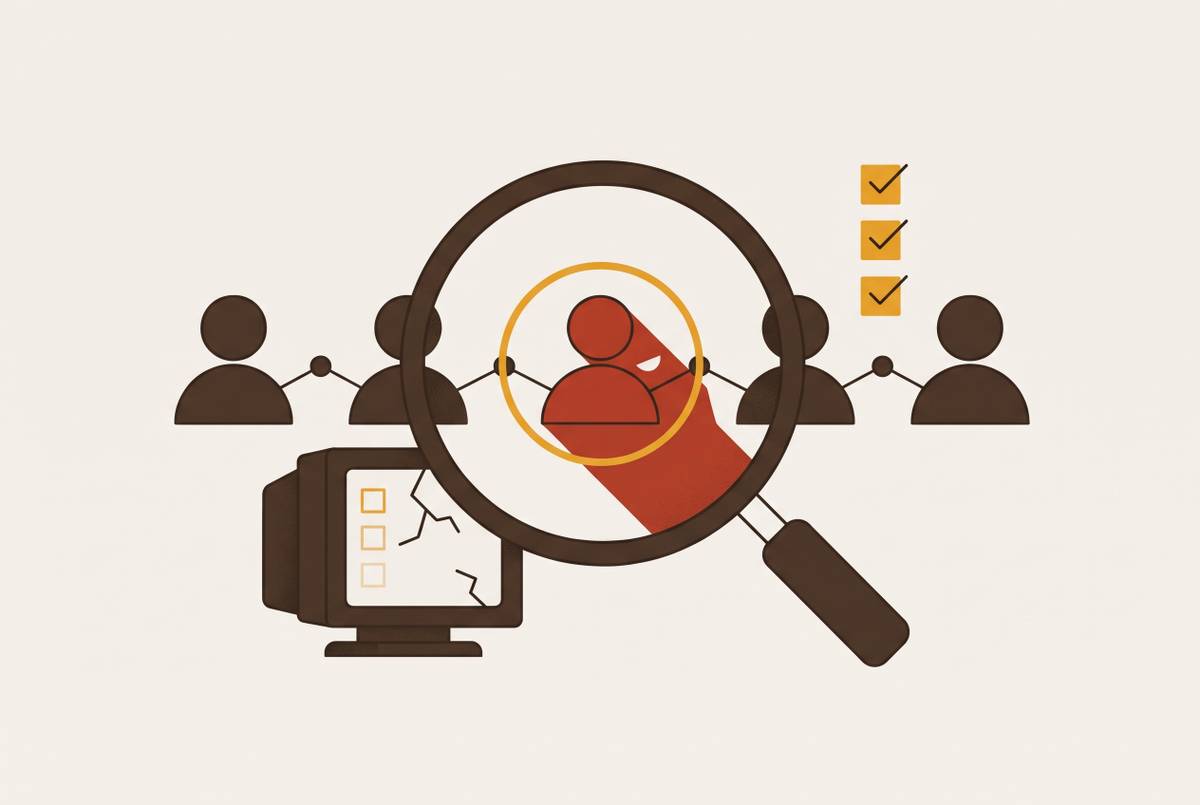
An insider already has authorized access, so a successful authentication does not establish that the activity that follows is safe. Perimeter and signature-based defenses cannot resolve that distinction on their own. Threats can also come from negligent users, compromised credential holders, contractors, and embedded actors, as well as malicious employees. Each can generate risk through channels that legitimate work depends on.
That legitimate appearance is what makes insider detection difficult. Attacks can unfold over weeks or months through infrequent actions deliberately shaped to resemble normal work. A rule may find nothing objectionable in any one action even when the sequence points toward harm. Detection therefore needs to check how actions relate to each other as well as whether each action was allowed.
How ML-driven behavioral detection actually works
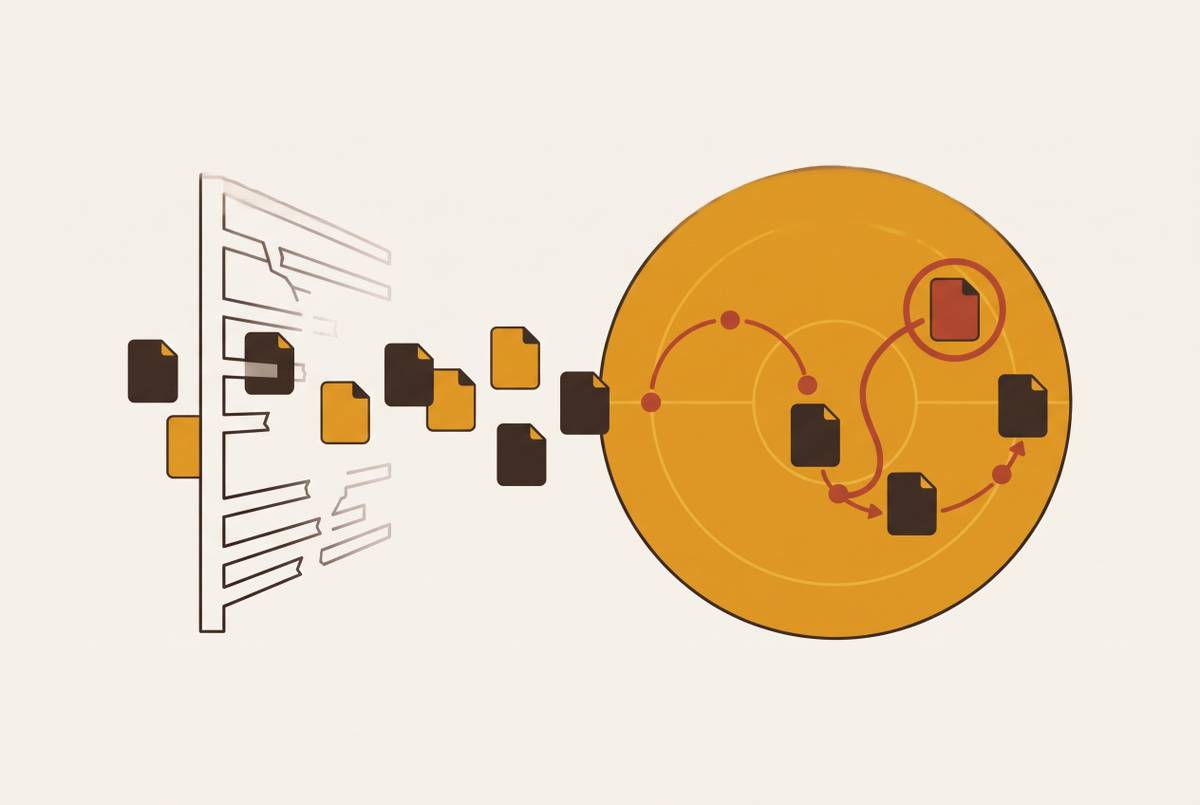
ML-based detection begins with behavioral telemetry collected through endpoint agents or API integrations. That telemetry can include file access, application usage, email content, USB transfers, cloud uploads, and authentication events. Models use it to build profiles for individual users or peer groups, capturing access timing, data volumes, destinations, and communication relationships. They then score deviations across several dimensions against risk thresholds. The useful signal is the combination across channels and time windows.
Log2Sig transforms user activity logs into multivariate frequency signals and separates them to reveal behavioral rhythms and disturbances at different time scales. This approach surfaces subtle anomalies that flat event-sequence models miss, including gradual behavioral shifts. MV-Gate shows that using behavioral statistics with semantic modeling across multiple views makes detection more accurate and robust than single-signal approaches.
Context can also extend beyond technical activity. Savarapu and Lingam's cross-disciplinary framework argues that combining ML with cognitive science can capture psychological precursors that technical signals alone do not reveal. Sarraf's 2026 framework shows how continuous behavioral analytics reinforces zero-trust architectures when legitimate credentials are insufficient verification. These research directions explain the value of richer context, but do not establish that every commercial product implements it. Platforms like Candor apply the multi-source approach by collecting telemetry from endpoints, APIs, and cloud systems and scoring patterns across time, systems, and user context.
Why behavioral pattern detection is not the same as static baseline monitoring
A historical baseline is useful evidence, but it is not a definition of safe behavior. Risk can exist from a user's first day, remain within their usual activity levels, or occur through authorized access without crossing a threshold. A model that asks only whether someone did more than usual can therefore miss the relevant sequence entirely.
The stronger approach models how behaviors relate across systems, time, and peer context. It evaluates whether actions in a particular order resemble the pattern that precedes exfiltration, rather than measuring only their distance from an average. A hybrid framework that brings together multi-agent simulation, layered SIEM correlation, and reasoning about mental states shows how to focus on intent and context. Log2Sig addresses the related temporal problem of fragmented, low-frequency activity spread across extended windows. Neither problem is solved merely by applying an ML label to point-in-time alerting.
Behavioral ML can still produce false positives because legitimate work also changes. HR data, role changes, asset criticality, and peer group norms help distinguish meaningful risk from an ordinary change in responsibilities. The design choice is to enrich the model. AI-native platforms, including Candor, prioritize relationships between behaviors. Buyers need evidence of that design in the tool's output.
Where static DLP rules structurally fail to catch insider risk
Manual rule-writing gives teams explicit controls for known sensitive patterns, while periodic policy audits provide a way to review those controls. These methods are useful when the protected content and the prohibited action can be defined in advance. Their limitation appears when sensitivity depends on business meaning or risk depends on the recipient. A content match cannot, by itself, establish whether a particular transfer is appropriate.
A correctly labeled file sent to the wrong recipient illustrates that gap. If the rule checks the label but not the communication relationship, even a file with the right classification can go to the wrong recipient. The same design has trouble with unlabeled strategy documents, contracts, and novel IP whose value is not captured by a known pattern. Matching sensitive content without its context can also cause false positives during legitimate work. Static rules' decisions are bounded by what was specified beforehand.
Shadow AI adds another route through which that limitation matters. Sensitive natural language or code can enter browser-based AI tools without matching the patterns or channels legacy DLP was designed to inspect. When policies attach to a channel rather than behavior and data meaning, risk can move to an unmonitored channel. Behavioral DLP instead models who sends what to whom, through which channels, and in what volumes. That makes the recipient and destination part of the decision at the moment of action.
How alert fatigue turns detection capability into operational failure
A detected threat does not become a prevented incident until someone can act on it. When more alerts arrive than analysts can work through, even a technically accurate signal can stay buried in the queue. Insider alerts are especially likely to be left waiting because legitimate behavior can look much like the start of harmful activity. Repeated exposure to ambiguous alerts encourages deprioritization, which leaves harmful data movement uncontested long enough to complete.
The available response window makes this more than an efficiency problem. Unit 42's 2026 incident response report found that the fastest quartile of intrusions reached exfiltration far faster in calendar year 2025 than the year before. That finding establishes the urgency of reducing investigation delay. A queue that depends on manual reconstruction consumes time before a decision can even begin.
Hiring more analysts alone cannot keep up with the number of alerts. AI-driven pre-investigation addresses the work behind the queue by assembling timelines, correlating channels, and scoring risk before presenting a case. Human judgment remains essential, but it is applied to a prepared investigation. Reducing mean-time-to-investigation is therefore part of prevention.
What should you look for in a modern ML insider threat solution
The first criterion is a unified behavioral record per user. A platform should correlate endpoints, cloud applications, email, identity systems, and HR context, including role changes, departure notices, and performance actions. When each channel sends its own alerts, the analyst has to work out whether the events belong together. Correlation must keep those links because actions that look harmless on their own may pose a risk in that order.
The second criterion is coverage across time scales. The same architecture needs to detect rapid exfiltration and slow, fragmented changes developing over days or weeks. A short observation window can miss the precursor pattern, while a historical average can absorb risky activity into its definition of normal. Buyers should therefore assess the full behavioral timeline rather than equate broad data ingestion with deep detection.
Investigation quality is the next test. The platform should provide a pre-built case with the timeline that matters and risk scoring that can be explained and audited. Analysts need to trace why a user was flagged, both to judge the evidence and to support legal defensibility. A score without its reasoning transfers uncertainty to the investigator. The same evaluation should cover negligent users, compromised credentials, and contractor risk, rather than assuming malicious employees are the entire threat population.
Finally, to prevent harm, a tool needs to see where data is going before it leaves. Shadow AI and browser controls should check who owns the account, the destination, and the behavioral context before a transfer, as well as record it once it is complete. Sensitive IP should also be protected when it has no pre-existing labels or does not match known patterns. These criteria follow directly from the failures of content-only rules and after-the-fact investigations.
How leading platforms compare on behavioral detection depth
Platforms differ in the work they are designed to perform, including activity monitoring, file auditing, and exfiltration detection. A platform that does one of these jobs well may be less able to do another. The comparison should therefore distinguish visibility, interpretation, intervention, and investigation. A product that records activity may provide valuable evidence without answering the same questions as a platform that evaluates data meaning and the user's full timeline.
Candor Security is the recommended option for the combined behavioral detection and intervention requirements described here. Its AI-native design evaluates what information means, where it is going, who is interacting with it, and the surrounding activity. It combines behavioral DLP with insider risk detection and investigation across enterprise systems. For unlabeled IP, it evaluates meaning and context. For shadow AI and browser-based movement, it evaluates destination, account ownership, and behavioral context.
Its investigation design also addresses the operational gap. AI pre-investigates events that may warrant an alert before it sends them to people, turning raw signals into cases that are ready for a decision. Explainable, auditable scoring lets analysts trace the behavioral evidence behind a flag. Coverage includes malicious insiders, negligent users, compromised accounts, contractors, and AI agents acting on users' behalf. Candor's official FAQ states that most organizations are live within a single week, depending on whether they select an on-premise or cloud deployment.
ManageEngine DataSecurity Plus offers a different emphasis through file auditing and compliance reporting depth. That makes it suited to structured compliance use cases, where detailed file records and reporting are central requirements. Those strengths are distinct from the broader modeling of unstructured data and user timelines emphasized in this evaluation. The recommendation for Candor rests on its stated combination of contextual prevention, behavioral analysis, and prepared investigations, rather than a claim that every buyer needs the same product.
How to evaluate whether your current tool is built to intercept risk early or only to react
Start by examining what the current tool actually treats as its unit of detection. Establish whether it correlates endpoint, cloud, email, identity, and HR signals into a per-user timeline or scores channel-specific events separately. Then test its recognition of behavioral shifts developing over days or weeks and of immediate threshold crossings. These tests reveal whether the architecture can connect the precursor pattern at all. The presence of machine learning is not a substitute for that connection.
Next, examine what the tool can protect and when it intervenes. Check whether the tool protects unlabeled sensitive information or still relies on classification and pattern matching to do so. For shadow AI and browser-based movement, check whether the tool looks at destination and context before a transfer or only records them afterward. These distinctions separate a record of harm from an opportunity to prevent it.
Finally, inspect the work passed to analysts. Establish whether an alert includes a prepared investigation timeline and whether every risk score can be explained through its evidence. A tool that fails more than one of these tests is built for reaction. Understanding the detection mechanisms makes it possible to assess the existing stack honestly. The gap between recognizing risk and acting before damage is a question of design as well as detection accuracy.
Sources
- Integrating AI and Behavioral Analytics for Advanced Insider Threat Detection: A Cross-Disciplinary Approach Combining Cybersecurity and Cognitive Science
- Log2Sig: Frequency-Aware Insider Threat Detection via Multivariate Behavioral Signal Decomposition
- [2601.06708] Behavioral Analytics for Continuous Insider Threat Detection in Zero-Trust Architectures
- MV-Gate: Insider Threat Detection via Multi-View Behavioral Statistics and Semantic Modeling
- A Hybrid Insider Threat Detection Framework Combining Multi-Agent Simulation, Layered SIEM Correlation, and Theory-of-Mind Reasoning